
Perennials, Tropicals > Opuntia > Opuntia cylindrica > Opuntia cylindrica
Opuntia cylindrica
Cane Cactus
Origin: Ecuador and Peru.
| Family |
| Cactaceae |
| Genus |
| Opuntia |
| Species |
| cylindrica |
| Category |
| Perennials, Tropicals |
| USDA Hardiness Zone |
| 9 |
| Canadian Hardiness Zone |
| Requires cool season protection under glass. |
| RHS Hardiness Zone |
| H3 |
| Temperature (°C) |
| 1 |
| Temperature (°F) |
| 26 |
| Height |
| 2 m |
| Spread |
| 0.1 - 0.2 m |
Photographs
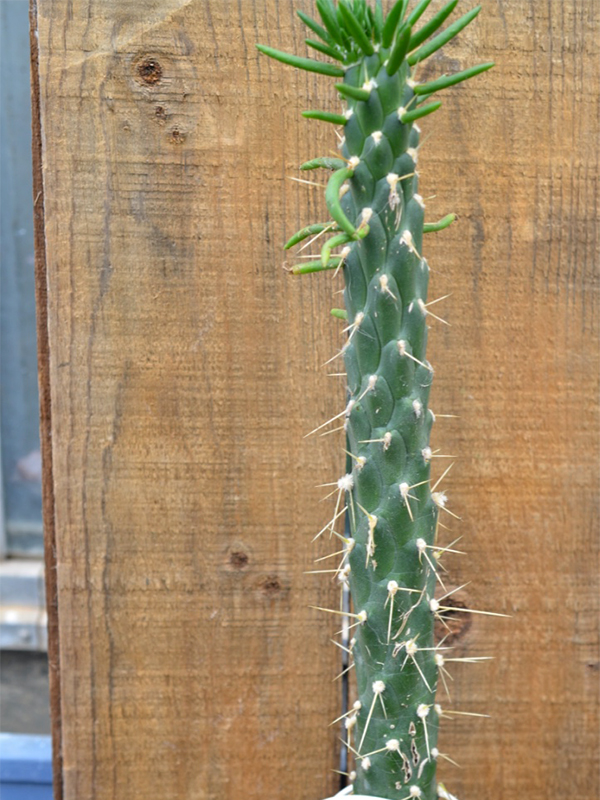
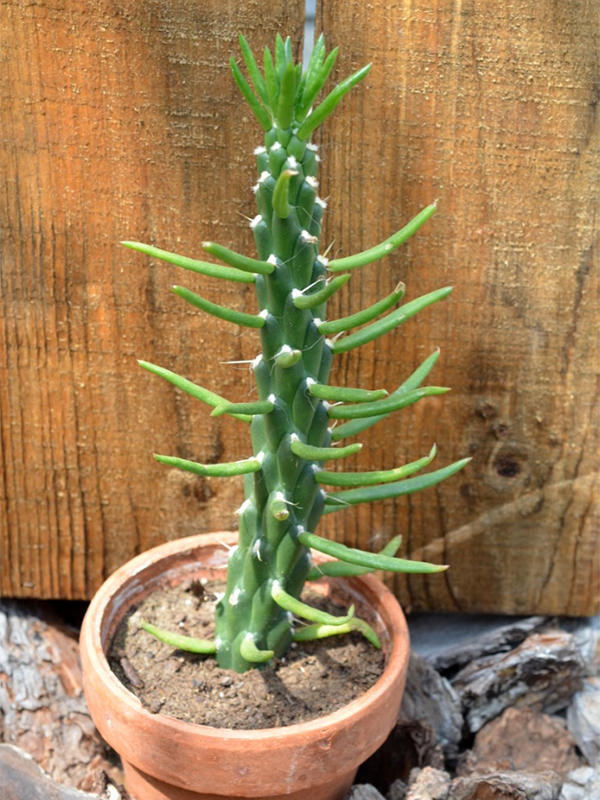
Cultivars
click to expand
Description and Growing Information
Flowering Period








| Landscape |
| In potted succulent collections, rock gardens, arid gardens, accent plant, potted patio or indoor plant or as a specimen. |
| Cultivation |
| Plant in well-draining, slightly neutral (pH of 6.4 - 6.7) cactus mix, gravelly or sandy soil in full sun. Repot annually to encourage growth. |
| Shape |
| Upright columnar. |
| Growth |
| Fast |
| Pests |
| Scale, mealybugs, and spider mites may be of concern as well as black tip fungus and stem rot. |
| Habitat |
| Arid rocky outcroppings and dry sunny deserts. |
| Bark/Stem Description |
| Smooth succulent columns covered with smaller finely-spined bodies protruding outward and upward, areoles insignificant and carrying 3 - 5 spines each. |
| Fruit Description |
| Small, spineless, egg shaped fruit. |
| Colour Description |
| Medium to vivid green bodies covered in a coating of spines varying from wooly white to dark brown. |
| Texture Description |
| Coarse. |
| Notable Specimens |
| The Devonian Botanic Garden, Devon, Alberta, Canada. Centennial Conservatory, Thunder Bay, Ontario, Canada. |
| Propagation |
| Seed or cuttings. |
| Ethnobotanical Uses (Disclaimer) |
| The plant is a source of mescaline. |

top